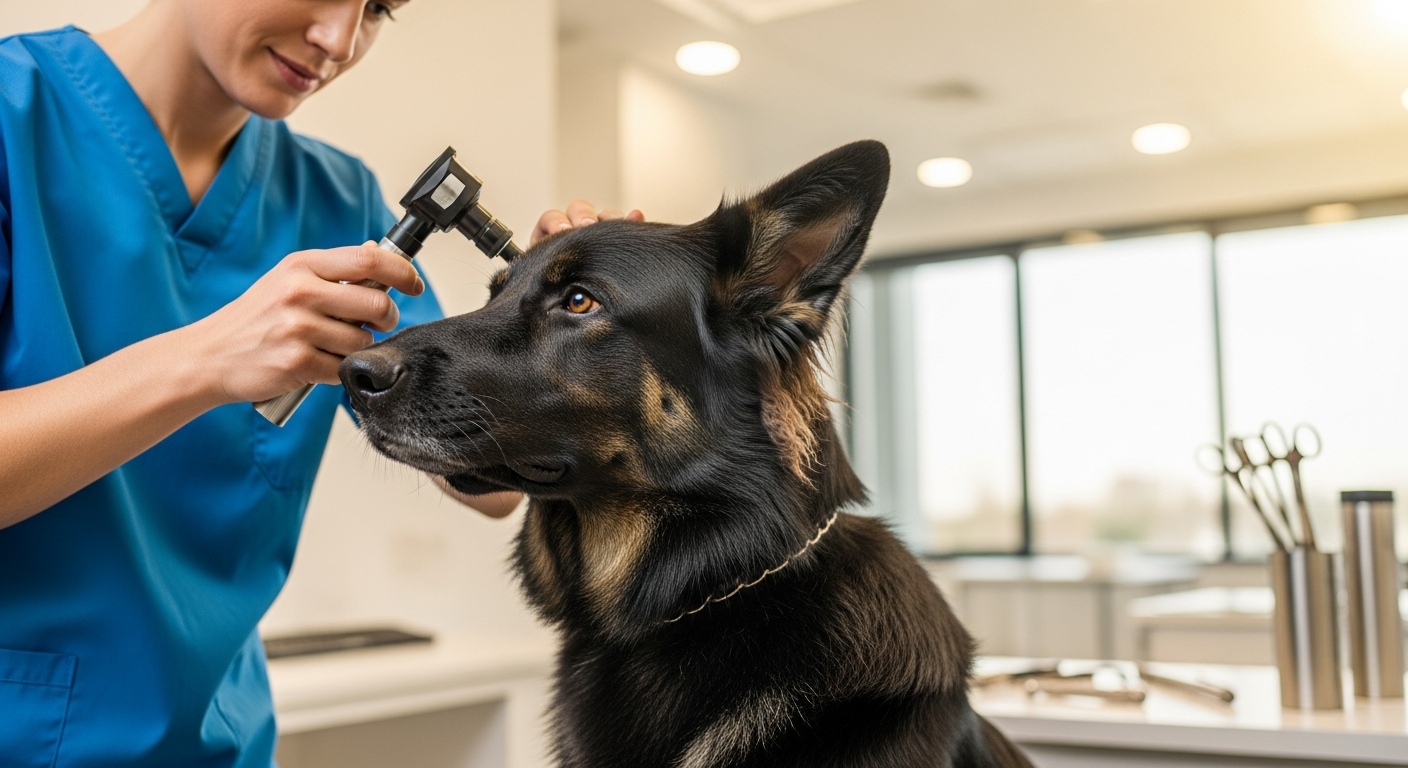
Pannus, known clinically as chronic superficial keratitis, is one of the most breed-specific eye diseases in veterinary ophthalmology. The condition affects German Shepherds at rates far exceeding any other breed, and the combination of immune dysregulation, ultraviolet exposure, and altitude creates a disease pattern that every German Shepherd owner should understand. Left untreated, pannus progresses to vision impairment and in severe cases functional blindness. Recognised early and treated consistently, pannus is a manageable chronic condition that most affected dogs live with comfortably for the rest of their lives.
What Pannus Actually Is
Pannus is a bilateral inflammatory disease of the cornea, the clear structure at the front of the eye. The disease is immune-mediated, meaning the dog's own immune system targets corneal tissue as if it were foreign. The earliest visible change is a pinkish-red band of granulation tissue that begins at the lateral or inferior limbus (the border between the cornea and the sclera) and spreads toward the centre of the cornea over weeks to months. As the disease progresses, the granulation tissue accumulates pigment, producing the characteristic dark brown or black corneal discolouration that owners bring to the veterinary clinic.
The third eyelid, or nictitating membrane, is also affected in most cases. The typical presentation is a thickened, depigmented, and inflamed third eyelid that loses its protective pink colour and develops a grey or raw appearance. This finding, called atypical pannus or plasmoma, is pathognomonic for the disease in German Shepherds and often precedes the corneal changes by weeks or months.
Why German Shepherds Are Disproportionately Affected
The breed association is so strong that pannus is sometimes called German Shepherd pannus in the older literature. The genetic basis appears to involve MHC (major histocompatibility complex) haplotypes that increase the probability of autoimmune corneal disease, and German Shepherds carry these haplotypes at higher frequency than most other breeds. Belgian Tervurens, Border Collies, Greyhounds, and Siberian Huskies are also overrepresented but at much lower rates.
Environmental triggers interact with the genetic predisposition. Ultraviolet radiation is the dominant environmental risk factor. Dogs living at higher elevations develop pannus earlier, more severely, and with more aggressive progression than dogs living at sea level. The literature documents a clear gradient: dogs in Denver develop pannus at younger ages and higher severity than dogs in coastal California, and dogs in the mountains of Colorado develop it earlier still. This is one of the cleanest breed-environment interactions in veterinary medicine.
Age of onset is typically three to five years, though pannus can appear as early as two years in high-UV environments. Progression is gradual but relentless without treatment, and bilateral involvement is the rule rather than the exception. About 95 percent of cases involve both eyes, though one eye is typically more advanced than the other at diagnosis.
Diagnosis and Differential
The diagnosis of pannus is primarily clinical. A German Shepherd between three and seven years of age presenting with bilateral symmetric corneal pigmentation starting at the lateral limbus and progressing toward the central cornea, with the classic third-eyelid changes, is almost certainly pannus until proven otherwise. Confirmation typically involves a veterinary ophthalmologist's slit-lamp examination, and cytology of the third eyelid occasionally clarifies ambiguous cases by demonstrating the plasma cell infiltration that defines atypical pannus.
The differential diagnoses include corneal pigmentation from chronic irritation (dry eye, ingrown lashes, entropion), corneal pigmentation from healed ulcers, and corneal tumours. Each of these is distinguishable from pannus by distribution, symmetry, and associated findings. Dry eye is ruled out by Schirmer tear testing (a painless diagnostic that every German Shepherd over three years of age should have done at annual physical exams). Entropion and ectopic cilia are ruled out by eyelid examination. Tumours are asymmetric and rarely affect both eyes symmetrically.
Topical Cyclosporine as the First-Line Treatment
The standard of care for pannus is topical cyclosporine ophthalmic ointment or solution. Cyclosporine is a calcineurin inhibitor that suppresses the T-cell-mediated autoimmune response at the corneal surface. When applied twice daily for the rest of the dog's life, cyclosporine halts disease progression and typically produces measurable regression of corneal pigmentation over weeks to months.
The commercial product available in veterinary medicine in most countries is Optimmune (1 percent cyclosporine ointment), manufactured by Merck Animal Health and marketed primarily for keratoconjunctivitis sicca. It is effective for pannus at the same dosing schedule. Compounded cyclosporine 1 to 2 percent in an oil vehicle is also widely used in the United States and is cheaper for long-term treatment. Tacrolimus 0.02 percent, a more potent calcineurin inhibitor, is the second-line option for cases that do not respond adequately to cyclosporine alone.
The American College of Veterinary Ophthalmologists publishes clinical guidance on canine ocular immune-mediated disease that every breeder and owner with a GSD should be familiar with. The practical takeaway is that pannus treatment is lifelong. Discontinuation of cyclosporine produces disease recurrence within weeks to months in almost every case. Owners who understand this commitment before starting therapy are more likely to comply with long-term dosing.
Topical Corticosteroids: Useful but Complicated
Topical dexamethasone or prednisolone acetate suspensions are often used as adjunct therapy during the initial treatment phase. Corticosteroids produce faster symptomatic improvement than cyclosporine alone, reducing the active inflammation within days rather than weeks. The limitation is that corticosteroids suppress corneal healing and increase the risk of corneal ulceration, which is a particular concern in German Shepherds because of the breed's common concurrent dry eye.
The typical protocol is dexamethasone four times daily for one to two weeks at initial presentation, tapered over four to six weeks as cyclosporine takes over as the sustaining therapy. Prolonged topical corticosteroid use is discouraged because of the ulceration risk, and cases that appear to require ongoing steroids should be rechecked for Schirmer tear test values to rule out concurrent dry eye.
Subconjunctival Injections for Refractory Cases
Dogs that do not respond adequately to topical cyclosporine alone sometimes benefit from subconjunctival injection of triamcinolone or methylprednisolone, administered by a veterinary ophthalmologist every three to six months. These injections deliver a depot of corticosteroid into the subconjunctival space, producing sustained local immunosuppression without the daily compliance requirement of topical medication. Injection therapy is second-line and is reserved for cases where owner compliance with topical treatment is poor or where disease progression is severe despite appropriate topical therapy.
Ultraviolet Protection Is Not Optional
Because ultraviolet radiation drives the disease, UV protection is a core element of management. Dogs diagnosed with pannus should have structured UV exposure reduction, and the practical elements include avoiding peak-sun exercise (10 AM to 4 PM in the northern hemisphere summer), providing shade during outdoor time, and in high-risk cases, fitting the dog with protective eyewear.
The canine eyewear market has matured considerably. Rex Specs and Doggles produce UV-rated goggles with prescription-strength protection, and well-conditioned dogs wear them without stress. Conditioning a German Shepherd to wear protective eyewear takes two to four weeks of patient desensitisation, but the long-term protective benefit for a dog living at altitude is substantial.
Relocation to lower altitude is occasionally discussed for severely affected dogs whose owners cannot manage the disease otherwise. This is a radical option and not practical for most households, but it is worth noting that the disease severity does modulate with ambient UV, and a dog moved from Denver to San Diego will often show meaningful improvement within six to twelve months.
Prognosis with Good Management
The prognosis for pannus with consistent treatment is excellent for vision preservation. Most well-managed dogs retain functional vision throughout their lives, with the corneal changes stable or slowly regressing over years of therapy. Dogs whose treatment is intermittent or discontinued progress to corneal opacification that can impair vision and in severe cases cause functional blindness in the affected eye.
For the owner, the practical experience of managing pannus is two daily medication doses, monitoring for compliance, annual or biannual ophthalmology rechecks, and UV protection as part of the dog's routine. This is a manageable chronic disease compared to many of the other conditions German Shepherds face. Our overview of German Shepherd lifespan and longevity places pannus in the context of the full breed-specific disease burden, and our piece on skin allergies in GSDs covers the related immune-mediated disease that often overlaps with pannus.
Screening and Breeding Considerations
Because pannus has a significant genetic component, breeding considerations matter. The Orthopedic Foundation for Animals maintains a Companion Animal Eye Registry (CAER) that certifies dogs as free from heritable eye disease at the time of examination, but pannus status is not usually a CAER-tracked condition because the age of onset is typically after the age at which breeding decisions are made. A responsible German Shepherd breeder should nonetheless track pannus incidence in the bloodline and avoid breeding dogs whose first-degree relatives have severe early-onset disease.
A German Shepherd puppy bought from a breeder who cannot or will not discuss pannus history in the line is a puppy whose disease risk is unknown. This is not a reason to avoid the breed - most GSDs either do not develop pannus or develop a mild form that responds well to treatment - but it is a reason to ask the question and to expect a breeder who has an informed answer.
The Takeaway
Pannus is a predictable, treatable, and manageable condition in German Shepherds. The key clinical lessons are: watch for bilateral corneal pigmentation starting at the lateral limbus in dogs between three and five years old; expect the third eyelid to change colour as an early sign; treat with topical cyclosporine indefinitely; provide UV protection commensurate with the dog's lifestyle and environment; and expect a near-normal life for the dog if the treatment protocol is followed. An owner who understands all of this at the time of diagnosis is in a good position to preserve the vision and the quality of life of their German Shepherd for years to come.